INTRODUCTION
Ahead of the launch of her new book Creative Practice and Embodied Narratives on 23 April, artist, researcher, curator and creative leader Dr Barbara Doran speaks with creativity consultant Dr Paulina Larocca about the ideas shaping her work. Exploring creativity as a way of engaging with complexity, Doran reflects on embodiment, transdisciplinary thinking, and the role of creative practice in health and wellbeing. This conversation offers a timely insight into a publication that invites us to rethink how body, story, and system intersect in more relational and responsive approaches to care.
Join Dr Barbara Doran for the book launch on 23 April: BOOK HERE
Order your copy of Creative Practice and Embodied Narratives: ORDER HERE


INTERVIEW
Paulina Larocca: Your book explores creativity, embodiment, and transdisciplinary thinking. How do you see these ideas connecting to the arts and health?
Barbara Doran: One of the key ideas in the book is that creativity is not only about artistic production; it is a way of perceiving and responding to complexity. Creativity allows us to recognise patterns, relationships, and possibilities that may not be visible through analytical frameworks alone.
In arts and health contexts, this becomes very important because health is not simply a medical condition or an outcome of services, but something that emerges through culture, relationships, and shared creative experience. Health emerges through relationships, through culture, community, meaning, and the environments we inhabit. Artists and creative practitioners are often working precisely in these relational spaces, helping people reconnect with their bodies, with others, and with shared stories. In that sense, creativity becomes a form of intelligence that supports well-being and social connection.
Transdisciplinary Thinking and Complex Challenges
Paulina Larocca: The book also emphasises transdisciplinary thinking. Tell us what that is and why you see this as important now?
Barbara Doran: Transdisciplinary inquiry allows us to bring together artistic practice, science, cultural knowledge, and lived experience. It acknowledges that creativity plays a crucial role in how we interpret information, navigate uncertainty, and imagine alternative futures.
Many of the challenges we face today (climate instability, rapid technological change, mental health crises, and widening social inequities) are not problems that belong to a single discipline. They are complex systemic challenges that require different forms of knowledge to work together.
For the arts and health sector, this means recognising that creative practice is not peripheral to health systems. It contributes to how people understand themselves, how communities make meaning, and how more humane systems of care can be imagined and enacted.
The Body as a Source of Knowledge
Paulina Larocca: A recurring theme in the book is the role of the body in knowledge and experience. Why is embodiment so central to your work?
Barbara Doran: Our bodies are constantly sensing and interpreting the world, often before we consciously articulate what we know. We can feel when a space is welcoming or when something feels unsafe, rushed, or disconnected. These embodied responses are part of how humans navigate social environments. There is also a deep wisdom in the body’s capacity to recalibrate itself. Often the body knows what it needs to do in order to restore balance, whether through rest, expression, connection, or movement. This can occur along a spectrum, from the small adjustments that help us regulate everyday stress to much larger processes of healing when people have experienced rupture, trauma, or loss.
Artistic practice provides ways for people to reconnect with this sensing intelligence. Through movement, image-making, storytelling, or collaborative creative activity, people can explore experiences that may not easily be expressed through language alone. In arts and health contexts, this becomes particularly powerful because many forms of distress or disconnection are held in the body. Creative processes can help individuals and communities rediscover forms of expression, connection, and meaning that support wellbeing.
A Method of Inquiry: Embodied Matter Exploration
Paulina Larocca: In your book, you introduce the idea of Embodied Matter Exploration, or EME. Could you explain what this means and why it matters?
Barbara Doran: EME, or Embodied Matter Exploration, is a term I have developed to hold a form of transdisciplinary, practice-led inquiry where body, matter, and environment co-create meaning. It recognises that understanding does not arise only through abstract analysis but through lived engagement with materials, places, and the relational dynamics of the world around us.
Artists often work through processes of experimentation, attention, and reflection, engaging directly with materials, environments, and cultural narratives. These processes generate insights that are not always captured through conventional research methods but are nevertheless important forms of knowledge.
EMEs centre presence, sensation, and rhythm, drawing on feminist, post-humanist, and relational paradigms of knowing. They cultivate attentiveness to the unseen, the intuitive, and the materially entangled, allowing creative practice to function as a form of inquiry that contributes to broader conversations across disciplines, including fields such as arts and health where embodied and relational knowledge play an important role.
Artists, Care and Community Wellbeing
Paulina Larocca: Artists often work quietly at the edges of care and community wellbeing. How do you see their role in shaping healthier societies?
Barbara Doran: Artists often work materially and relationally, in dialogue with space, place and community. Creativity in this sense becomes more than expression: it is a form of care, a way of thinking, and a kind of cultural metabolism that helps individuals and communities process experience and sustain wellbeing.
Creative practice operates across multiple levels at once, within the body, between people, and across wider cultural systems. In arts and health, we see this clearly: creative activity can support reflection and regulation within individuals, connection between people, and shared meaning within communities. Often this begins with very small acts of attention or attunement – tiny adjustments in how we listen, move, gather, notice or create. These micro-practices help the body and social environments recalibrate, building integrated capabilities that support resilience and wellbeing over time. Across a culture, these small acts accumulate and expand into larger collective experiences, moments of preparation, sport, festivals, community gatherings and celebration, where people rehearse connection, coordination and shared meaning together.
I’m also interested in making this space more porous and accessible. Not everyone who works creatively calls themselves an artist, yet many everyday practices that support wellbeing (cooking, gardening, making, careful observation, organising gatherings or creating moments of celebration) draw on the same kinds of creative capacities that contemporary art engages with. I sometimes use the term artification, drawing on the work of Ellen Dissanayake, to describe how creativity moves across different domains of life. It helps open the door for more people to recognise and participate in creative practices that support connection, care, and wellbeing.
A Different Kind of Book Launch
Paulina Larocca: Earlier in the book you introduce the idea of Warm Data, drawing on the work of Nora Bateson, and how relational awareness can help us understand complexity. Your book launch is being presented as a living example of this idea — reading bodies and people in action rather than presenting a traditional talk. Could you tell us more about that?
Barbara Doran: The book explores relational thinking and complex systems, so it felt important that the launch itself reflected those ideas. Instead of a lecture or panel discussion, the launch will feature multiple readers sharing excerpts from different chapters simultaneously across the space.
People will be able to move between these readings, encountering different themes and voices in a nonlinear way. The intention is to create an environment where ideas unfold through conversation, movement, and shared experience rather than a single narrative.
Rather than simply watching or listening, people are invited to engage with the ideas in an immersive and embodied way – moving through the space, encountering different voices, and noticing relationships between the themes of the book. In that sense, the launch becomes an extension of the book’s approach – an opportunity to experience the ideas through collective exploration.
Join Dr Barbara Doran for the book launch on 23 April: BOOK HERE
Bevery Room, University of Sydney, Holmes building
4.30pm- 6.30pm.
Order your copy of Creative Practice and Embodied Narratives: ORDER HERE

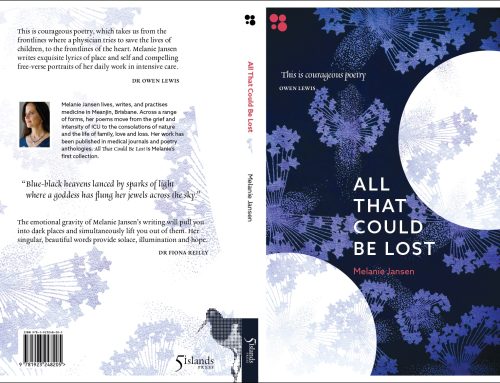
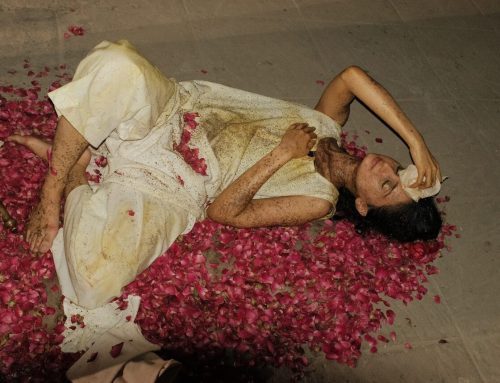
Image captions:
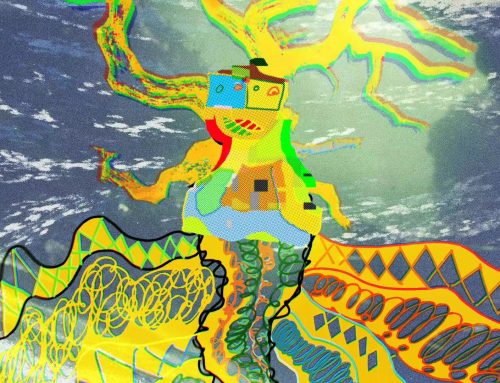
- Binary Operators, performing digital code. Photograph, Barbara Doran, 2012
- Thinking through drawing. Knowledge through making. Sketch collage, Barbara Doran, 2021
- Softly quantified (stitched formulas). rethinking systems + measurement. Paper work, Barbara Doran, 2012
- My Grandmother’s sewing book. Care, culture, lineage. Olive Smith, 1937
Co-Written by Barbara Doran, Paulina Larocca and Elyssa Sykes-Smith.
Posted by Elyssa Sykes-Smith.
-
Dr. Barbara Doran Barbara Doran is a creative leader, artist and researcher at the intersection of art, health and education. As Creative Lead for the SPHERE Knowledge Translation Platform, senior academic at UTS, and President of Arts Health, she brings 25+ years advancing arts-based research and collaboration. Author of three books, she positions creative practice as essential cultural infrastructure for health, connection and systems transformation.
-
Dr. Paulina Larocca is a practice-led artist, researcher and creative facilitator. As a part-time academic at the University of Technology Sydney, she works across creative health, grief and more-than-human relations. She designs participatory projects that use movement, making and conversation to help people navigate complex experiences of illness, care and change.
-
Elyssa Sykes-Smith is a multidisciplinary artist, educator and researcher, and Media Officer at AHNNA