By Elyssa Sykes-Smith
Public art shapes how we experience our cities, not only aesthetically, but socially and emotionally. As conversations around arts and health continue to expand globally, artists and researchers are increasingly exploring how creative interventions in public space can foster wellbeing, connection and civic belonging.
Few practitioners work across these intersections as fluidly as Dr Jacek Ludwig Scarso. An artist, curator and academic, Scarso is Reader in Art and Performance and Course Leader of the MA Public Art & Performative Practices at London Metropolitan University, as well as Deputy Director of the CREATURE Research Centre for Creative Arts, Cultures and Engagement. His practice spans performance, public art, curation and research, including his role as Director of Elastic Theatre, Senior Curator at Fondazione Marta Czok, and Trustee of The Line – London’s public art walk.
Working across cities including London, Rome and Venice, Scarso’s projects often blur the boundaries between performance, installation and social encounter. Rather than presenting artworks as fixed objects, his work frequently focuses on orchestrating situations, creating environments where audiences encounter art as part of everyday life.
I first encountered Scarso while attending the London Sculpture Week Symposium, where his approach to moderating discussions around public art stood out for its warmth and openness. His ability to connect ideas across disciplines, and to invite audiences into those conversations, reflects many of the themes present in his artistic and academic practice.
In this conversation with the Arts Health Network of NSW/ACT, Scarso reflects on playfulness in creative practice, the evolving relationship between art and health, and how public art can create more inclusive and emotionally resonant shared spaces.
“When art enters public space, it carries a responsibility to invite people into dialogue.”

Interdisciplinary Practice: Play, Performance and Orchestrating Creative Encounters
When we spoke, I began by asking Scarso how his multifaceted career—spanning performance, curating and academic research—has shaped his understanding of creativity in public space.
“Playfulness is always the key. I originally trained in theatre, and in English the word play is fundamental to theatre itself. That sense of curiosity, the messiness of experimentation and exploration, is something we often carry from childhood, but risk losing within the structures of adulthood.
Looking back at my career, I sometimes wonder how to make sense of its different strands. I began in theatre, moved into dance and performance, then into directing with Elastic Theatre, creating site-responsive interdisciplinary work somewhere between opera, circus and new writing. Later I developed multimedia installations, began curating exhibitions, alongside academic research and teaching.
For a long time, I described this simply as interdisciplinary practice. But more recently I realised that what unites these activities is less about making something and more about arranging.
Coming from performance, much of the work involves orchestrating relationships—between people, ideas and spaces. Directing a performance, curating an exhibition, or facilitating a symposium all involve arranging situations in which experiences can unfold.
Interestingly, studying Japanese flower arranging for several years also influenced this way of thinking. That practice emphasises the process of composition, rather than simply the finished outcome. I began to see how similar principles applied across my work.
In that sense, creativity in public space often involves orchestrating encounters that invite people into dialogue, rather than presenting something fixed or closed.” — Dr Jacek Ludwig Scarso
Defining Arts and Health Today: Beyond “Applied Art”
“In recent years there has been an important shift in how the relationship between art and health is understood.
Traditionally, art connected to health was framed as applied art, often implying it somehow had less cultural value or “gravitas” than gallery-based work. This idea stems partly from Enlightenment thinking—particularly the Kantian notion of art’s ‘purposeless purpose’, which, directly or indirectly, has continued to be surprisingly influential to this day. In light of this, once art becomes functional or useful, it is often categorised differently, perhaps as design or social practice.
But this division is increasingly being challenged. There is a growing belief that work engaging with communities, wellbeing or healthcare can and should be artistically innovative and conceptually complex.
The pandemic made this relationship particularly visible. During lockdowns many people instinctively turned to artistic experiences—music, film, literature— to fill parts of daily life that would be otherwise dedicated to going out. At the same time, outdoor public art became especially significant.
For example, The Line, London’s public art walk along the waterways of East London, saw increased engagement during this period because it offered free and accessible cultural experiences outdoors.
Importantly, the concept of health here extends beyond a purely medical definition. It includes broader ideas of wellbeing—emotional, social and environmental. Public art programmes increasingly recognise this through initiatives such as mindful walks and participatory activities that connect creative experiences with wellbeing.” — Dr Jacek Ludwig Scarso
Public Art as a Catalyst for Wellbeing
“Public art occupies a unique position because it exists within shared environments. Unlike gallery exhibitions, it cannot assume a self-selecting audience.
When artwork enters public space, it takes up space that belongs to everyone, and that creates a responsibility to invite dialogue.
This does not mean public art must please everyone. In fact, some of the most powerful works divide opinion. But the work should remain open enough to encourage engagement and reflection.
Scale is interesting in this context. Public art is often associated with monumental sculpture, yet smaller, temporary or ephemeral works can sometimes create more meaningful encounters.
What matters most is whether the artwork creates a moment of reflection and wonder within everyday life.” — Dr Jacek Ludwig Scarso

Evaluating Cultural Impact: Rethinking Evidence and Measurement
Our conversation then turned to a challenge frequently raised in arts and health research: how the impact of artistic experiences can meaningfully be evaluated.
“Cultural organisations can easily report attendance numbers, but statistics rarely capture the deeper emotional or experiential impact of artistic encounters.
In research I conducted with the organisation Artichoke, which produces large-scale public art events, we discussed how difficult it is to measure something as personal as wellbeing. Quantitative data can tell us how many people attended an event, but it cannot fully capture the meaning of individual experiences.
Personal stories often reveal far more about the cultural value of an artwork than numerical ratings or survey scores.
There is growing recognition within cultural research that qualitative accounts—lived experiences and anecdotes—are essential for understanding the impact of the arts. The challenge is finding ways to document these experiences without reducing them to simplistic metrics.” — Dr Jacek Ludwig Scarso
Designing Public Art for Wellbeing: Framing Engagement Rather Than Solving Problems
“When public art is commissioned today there is sometimes an expectation that it should directly solve social problems. While art can be fundamental in addressing social issues, it is important to recognise that its role is not always to provide solutions. This, again, does not mean being purposeless, but rather that art, in fostering reflection, questioning and emotional engagement, has its own ways of contributing to society.
For me, the key question is less about producing artworks specifically about health, and more about how we frame artistic programmes so that wellbeing becomes part of the experience. This might involve thinking carefully about accessibility, sensory engagement, narrative or participation.
Equally important is the language we use when speaking about art. Contemporary art discourse can sometimes become overly self-serious, reinforcing the idea that art is a luxury accessible only to specialists.
By communicating about art in more open and welcoming ways, we can create conditions where people feel invited into the conversation.
Coming from performance, I’m also very aware of the embodied dimension of artistic experience. Performance reminds us that art can be visceral, it can move people emotionally as well as intellectually.” — Dr Jacek Ludwig Scarso
Advice for Emerging Practitioners: Creativity, Strategy and Reinvention
“For artists working at the intersection of public art, performance and wellbeing, the first piece of advice is not to lose the sense of playfulness that often draws people into creative work in the first place.
This field can be challenging and frustrating, but curiosity and enjoyment remain essential.
At the same time, artists increasingly need to think strategically about sustaining their practice. For many practitioners this means developing multifaceted careers—combining creative work with teaching, curating, research or other cultural roles.
I often encourage students to think entrepreneurially—not simply in a commercial sense, but in terms of initiative and creativity. In an era where artificial intelligence can replicate many existing forms of production, one of the most valuable quality artists can cultivate is the ability to invent new ways of combining ideas and practices.
Artists constantly reinvent themselves in order to sustain their work. That adaptability may ultimately make the arts more resilient than many other fields.” — Dr Jacek Ludwig Scarso
Public Art as a Shared Cultural Right
As our conversation concluded, Scarso returned to a broader reflection on the role of public art within society.
“At its best, public art reminds us that creativity should not be understood as a privilege reserved for a few. Because it exists in shared environments, public art demonstrates that artistic experiences can be embedded within everyday life, accessible to anyone who encounters them.
Reimagining how public art is commissioned, framed and discussed is therefore not only a cultural question, but also a social one. By creating more open and inclusive artistic environments, public art can help reinforce a simple but powerful idea: that art belongs to everyone.” — Dr Jacek Ludwig Scarso

Website: jacekludwigscarso.com
Image captions:
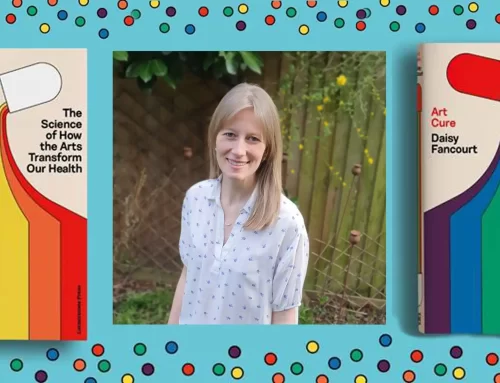
- Jacek Ludwig Scarso, portrait, Tate Modern
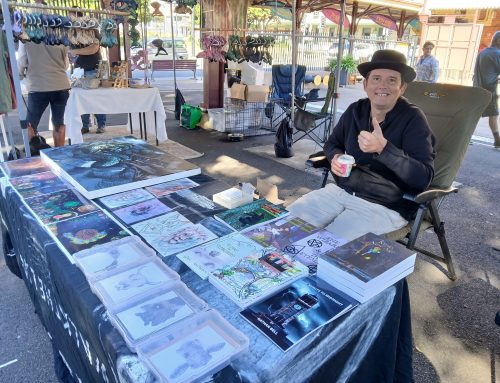
- Jacek Ludwig Scarso, IN LIMBO Tate Modern, in collaboration with London Metropolitan University and Anise Gallery
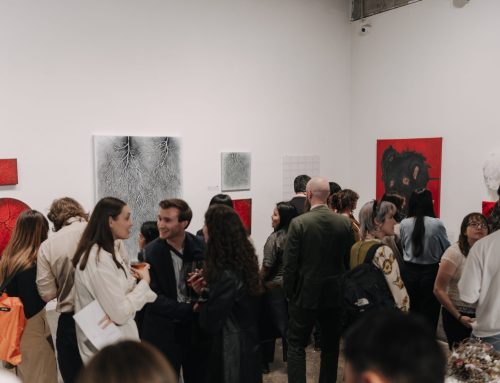
- Jacek Ludwig Scarso, London Festival of Architecture 2023 MA Public Art and Performative Praxtices workshop London Metropolitan University
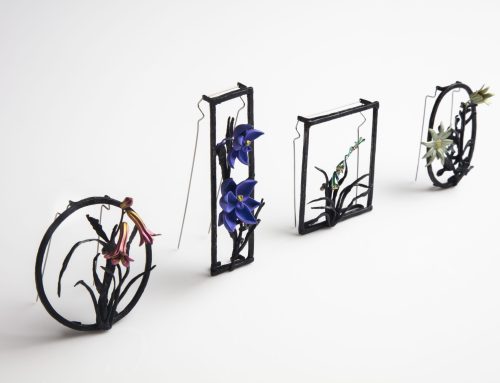
- Jacek Ludwig Scarso, Artificial Neons Series – Look at the Stars 2025
Written and posted by Elyssa Sykes-Smith.
-
Elyssa Sykes-Smith is a multidisciplinary artist, educator and researcher, and Media Officer at AHNNA